Henri Nouwen and The Prodigal

About a year ago, my friend Mary Newkirk and I went through Henri Nouwen’s book, The Return of the Prodigal Son, A Story of Homecoming, together.  It is one of those books that I think is an essential read for everyone, whether you consider yourself a person of faith or not.  As a result of some of our discussion together, I wrote a poem (Forgiveness) and she wrote this review.  She is such a good writer, check out her blog: http://becominggodsbestme.blogspot.com/

*************************

Ahhh, I have done it again. I have forgotten how to be “the father” in my relationships; I have forgotten how to “step over” the landmines of silly offenses that come my way…daily, it seems. Will I ever really become like the father in the familiar story that has grabbed my heart and attention anew? The millennia-old story that Jesus told of the prodigal son, the lost son…or sons, as Henri Nouwen determines, and we may overlook.  The story is in Luke, chapter 15. But for Henri Nouwen this parable came alive through the masterpiece of Rembrandt, named “The Return of the Prodigal Son”. And he wrote a book about how studying the painting and the artist impacted his life.

My friend Mary recommended this book, The Return of the Prodigal Son, A Story of Homecoming, a few years ago. (It seems much of what I read is a result of Mary’s recommendations, I’m so grateful!) This book seems to be one that, much like the Bible, whenever you read it, you find different “gems” that fit the circumstance of your life at that moment. I’ve read it at least three times, and each time I must underline different sections. I guess that’s how you know when you’ve found a valuable work.

On my most recent journey into this book, I was particularly impacted by the idea of the compassionate love of the father and what Nouwen thinks are the three components of this fatherly love: Grief, Forgiveness and Generosity. 

Grief in that it asks us to shed tears over the sins of the world, that they pierce our hearts as we realize the waywardness of God’s children. Nouwen says much of our praying is really grieving, over the sins of the world, but even more-so because of our innate recognition of the boundless divine love of our Father.

Forgiveness is the second characteristic of the compassionate love of the Father, the second quality we must strive for in becoming the father in our own story. It is the father in the parable of the lost son who shows us how to not only say we forgive, but to actually “step over” the offenses that come our way. The offenses especially hurt when they are lobbed at us by our closest loved ones. They are bound to hurt the worst, to linger the longest, to burn into our hearts and memories. I wonder if I will ever become the father in this respect? That “stepping over” is so difficult…because after all, it is all about me! How could they? Why would they? Why does no one appreciate me and treat me with the care and attention I deserve? Becoming the father in my relationships necessitates that I step over, climb over, those walls of offenses that potentially kill a compassionate heart, that call my loved ones home with unconditional love. Yes, this is the most difficult for me, to climb over and not keep looking back.

Generosity is the third component of the compassionate heart. It calls for giving without reserve…giving energy, time, money, attention…all of the things that really cost me something. It is giving as they go out, and giving as they come back “home”. I wonder if I will ever consistently, authentically be “the father”?

For Henri Nouwen, it was about a painting. For me it is about his book by the same name. For you it may be something else entirely. But I recommend this book as you journey through the stages, as we all do, of being the younger son, the elder son and hopefully on to the true calling of being the father of your story. We are all of these at different stages in our life and each time you pick up this book, you will recognize yourself, I guarantee it!

Mary Newkirk

***********************

Thank you, Mary!
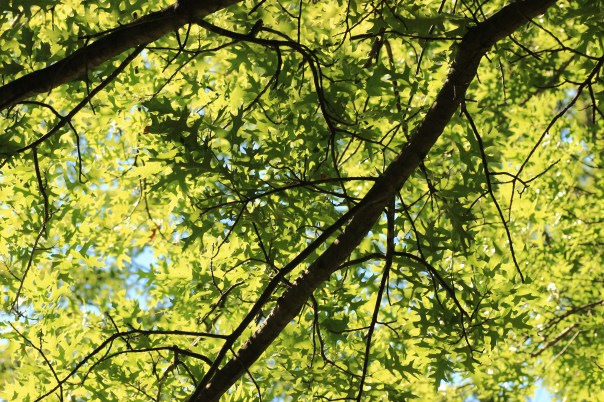
Weaving

IMG_8467When wind is woven into trees
they bow and dance and breathe
…the branches bend
…and leaves move free
when the wind weaves through the trees.

When the rain is woven in the ground
the trees they drink
…and flora sups,
…their thirst is quenched
when rain it weaves itself into the ground.

When love is woven into lives
they mend and heal and thrive
…the fruit it swells
…and amplifies
the love that’s woven in the lives.

Our destiny is woven full
of love and loss
…like wind and rain
…this pain and grace
that makes us bend
…will also mend
…and help us breathe.


(Photo taken by Timothy Herbert)

Lover’s Eyes

Oh the lover’s eyes
that take me in
and see a secret self,
unseen until this moment.
A fleeting moment,
caught between the dust motes,
…for our hearts connect
across the room.

I remember seeing for the first time, the man who became my husband.  We saw each other across a room full of people.  Now, 40 years later, we sit in recliners across the room from each other and occasionally I will look up and find him looking at me.


The Welcoming Prayer Practice

The Welcoming Prayer (by Father Thomas Keating)
Welcome, welcome, welcome.
I welcome everything that comes to me today
because I know it’s for my healing.
I welcome all thoughts, feelings, emotions, persons,
situations, and conditions.
I let go of my desire for power and control.
I let go of my desire for affection, esteem,
approval and pleasure.
I let go of my desire for survival and security.
I let go of my desire to change any situation,
condition, person or myself.
I open to the love and presence of God and
God’s action within. Amen.

Welcoming is an act of hospitality.  We, (maybe it is just me) easily say hello to joy, love, and all the “positive” emotions, but it seems difficult to know what to do with our other emotions.  We have a proclivity to “stuff” or try to ignore those emotions like bad neighbors.  When we welcome our negative experiences and emotions, we are more present to our whole selves, and better able to bring that whole self to God in humility and honesty.

The Welcome Prayer is one of welcoming the emotions we are experiencing, and then letting go of the things we cannot control.  It is a prayer that invites us to look at our emotions and the events of our lives, acknowledging them and being present to them, so we can then release them.  It is as though we say to ourselves, “Ok, I am feeling this way.  Lord, you see it, I see it.  This is where I feel it in my body.  I welcome (naming this feeling).  Can we sit with it for a few minutes?”  And then we release those emotions and feelings. 

David G. Benner, in his book Opening to God, which I think is an excellent book on prayer, has written a very concise and understandable section on the Welcoming Prayer.

He says, “Before we can welcome an emotion, we must bring it into consciousness.  We must face it directly and feel it as a sensation in our bodies…Do not judge, analyze or try to control whatever you are experiencing.” (p. 154)  We really cannot welcome or release what we do not acknowledge.  How can we bring something to the Lord that we are not noticing completely or pretending does not exist? We have to admit that at this moment we are feeling something we do not enjoy.

Then, he goes on the say, “When resistance is replaced by welcome, we remove the power of these unchosen events to disturb our peace.  Once we respond to them with hospitality, their disruptiveness begins to diminish-sometimes with astounding speed.”  (p. 155)  There were seasons when my children were quite young, where they were  disruptive to our family.  Times when they would quarrel more and made it hard for the rest of us.  I found that paying more attention to that one child, welcoming them into my presence, diminished the disruptive behavior.  They were suddenly seen and observed, and maybe that was all that was needed.  There have also been times, when I have been with people who were very upset and I’ve given them a place to talk about what is going on, acknowledging their feelings.  When I’ve done this, it has been interesting to watch them relax.  So, maybe this phase of the welcome practice is a time when we extend that hospitality to ourselves and our feelings, as we share them with God.

Benner makes a crucial distinction when he says, “It is important to recognize, however, that what we are welcoming is our inner response to the present moment, not the whole set of circumstances that might surround it.”  (p. 155)  In other words, we are not welcoming an illness, or people who are abusive.  We are bringing our emotions and feelings that we are presently experiencing to the forefront of our consciousness.

One last note from the section in David Benner’s book: “What we must release is not simply the negative feelings but also the assumption that to be happy we need to be in control.”  (p. 155) Maybe this is the most difficult part of the Welcoming Prayer.  We can only keep so many ping-pong balls under water at one time.  We cannot control everything and realistically, very little.  This makes me think of another prayer, but that is for another time.

_____

There are many others who have written on this subject, but two resources that I highly recommend: Opening to God, by David G. Benner on different prayer practices, and an online resource from Contemplative Outreach.  https://www.contemplativeoutreach.org/category/category/welcoming-prayer

What do you see?

IMG_5527.JPGWhen you look at this picture what do you see? An hour ago, when we had just gotten home for an acquaintances’ and I was in bedtime mindset, I saw my three year old son standing in the water. I was so frustrated as I was ready for them to be snoozing, so I called him in and we had an upset which meant straight to bed for him. After both kids were finally in bed (don’t judge, yes I look forward to them being in bed, but I also look forward to them being awake! 😉 ), I was reading on the couch when I realized what I had missed.

When we got home, he had climbed up the stairs, taken off his boots, and slipped his toes into the water. And he was quiet. Let me repeat that, my three year old was quiet. As I look back, he was standing in the water, hand resting on a chair for balance, and his eyes were watching the birds in the trees. I missed him being present. I missed being present. I have come to think of ‘being present’ as looking for what is important right now and in this moment– and I blew it.

After stepping out of the water, he proceeded to dump it out as any natural child would. So, I went and filled it up again, retrieved my son from bed, and had him step back in the water. I then asked what did he see, he saw a bird 20 yards away in a tree. What did he feel, he felt the chair he was holding on too. What else did he feel, he felt the cool water. I told him I was glad he wanted to stick his toes in the water, but it was also important to listen to Mama. And we talked about it. We went back to his room, I tucked him back in, then returned to my book.

Parenting doesn’t feel natural to me. Being present– looking for the important thing that is happening right now, isn’t easy for me. But I want it to be.